If rooms feel uneven from one side of the house to the other, your attic seems to run hot, or certain areas never feel comfortable, the insulation may be part of the problem. Drafts, rising energy use, and spaces that stay too warm or too cold often point to gaps that fiberglass alone may not handle well.
Residential spray foam can help seal those trouble spots and create a tighter building envelope. At Douget's Spray On Spray Foam Insulation, we help homeowners in Madisonville, TX choose insulation solutions that fit the home, the layout, and the way the space is used.
Spray foam is often a good fit when a home has rooms that never seem to settle down temperature-wise. It can help reduce air movement through cavities, corners, and hard-to-reach spaces that are often part of attic, crawl space, and wall insulation concerns.
Homeowners usually start looking at residential spray foam after they notice one or more of these signs:
For many homes, the issue is not one single spot. It is a mix of small openings that let conditioned air escape and outside air move in. Spray foam can help address that pattern directly.
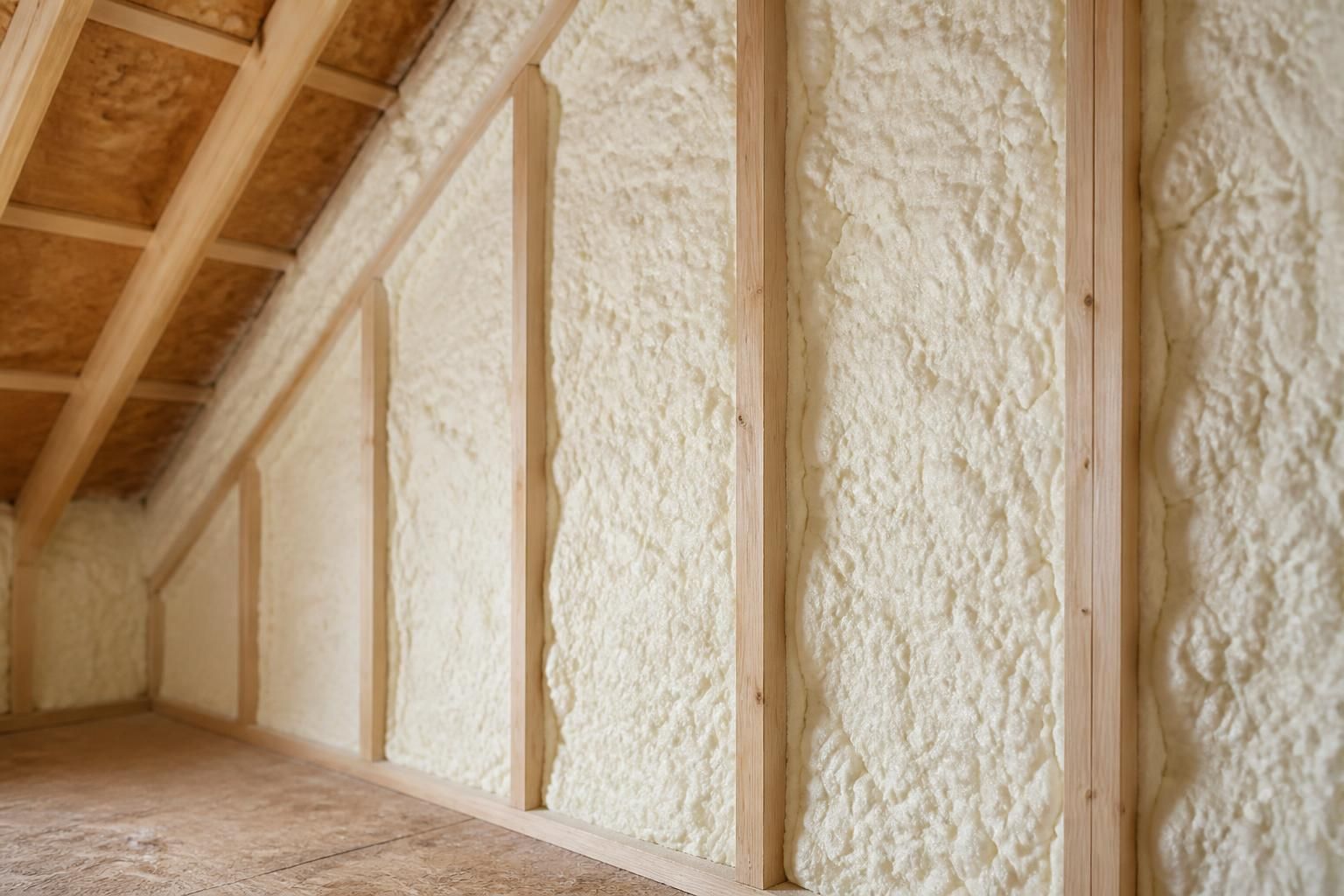
Residential spray foam does two jobs at once. It adds insulation value and helps seal air leaks at the same time. That makes it useful for places where traditional insulation may leave small openings behind, especially around framing, joists, and irregular surfaces.
When air slips through gaps, comfort can become difficult to control. Spray foam expands to fill many of those open spaces, helping reduce unwanted air movement through the home.
Homes have plenty of corners, seams, and transitions. Spray foam can help cover areas that are hard to pack neatly with other materials, especially around attics, crawl spaces, and new construction details.
Some residential areas call for insulation that helps limit air movement where moisture can become a concern. The right application can support a cleaner, tighter insulated space without leaving obvious gaps behind.
Not every home needs the same insulation approach. We look at the area being insulated, how it is built, and what the homeowner wants the space to do.
Residential spray foam can be a strong option for:
At Douget's Spray On Spray Foam Insulation, we also help homeowners think through how insulation choices affect the whole home, not just one room. That can matter when a house has mixed construction or past insulation work that never quite solved the comfort issue.
We offer residential spray foam as part of a broader insulation service approach for homes throughout Madisonville, TX and nearby communities. The right application depends on where the air movement is happening and how the space is built.
Attics often play a major role in home comfort. Spray foam can help reduce heat transfer and limit the air exchange that makes rooms below feel harder to cool or warm.
Crawl space insulation can help address drafts, humidity concerns, and air movement from below the living area. That can make the home feel steadier overall.
For new construction insulation, spray foam can be integrated while the structure is still open and accessible. That allows us to cover the spaces that are easiest to reach before finishes are installed.
Retrofit insulation works well for homes that already exist but need an upgrade. These projects often focus on problem areas instead of replacing every surface.
Homeowners usually want a clear process before any insulation work begins. We keep the conversation focused on the space, the concerns, and the result you want to achieve.
That process helps keep the project straightforward and centered on the rooms or areas that need the most attention.
Many homeowners start with comfort and quickly notice that energy use is part of the same conversation. If your home has weak insulation coverage, your heating and cooling equipment may need to work harder than it should to hold indoor temperatures steady.
Residential spray foam can support energy efficiency by reducing air leakage and helping the home retain conditioned air. That does not mean every house will respond the same way, but it does mean the insulation layer is no longer leaving obvious openings for air to pass through.
This is especially useful for homes where certain rooms never seem to match the rest of the house. A tighter insulated space can feel easier to manage day to day, with fewer hot and cold swings around the home.
Some insulation problems are easy to spot, and others build slowly over time. Homeowners often reach out when they are tired of adjusting the thermostat, moving fans around, or dealing with rooms that just do not feel right.
People also call when they are planning a remodel, finishing a new build, or looking at an insulation upgrade after years of living with the same discomfort. Douget's Spray On Spray Foam Insulation works with homeowners who want a practical solution for the space they have now, not a one-size-fits-all answer.
Serving Madisonville, TX, we also help with nearby areas such as Huntsville, Bryan, College Station, Navasota, Crockett, Centerville, Caldwell, and Franklin.
It helps reduce air movement through open spaces, so indoor temperatures are easier to hold from room to room.
Common areas include attics, crawl spaces, wall cavities, additions, new construction, and retrofit projects.
Yes. Retrofit insulation projects often use spray foam to improve problem areas without changing the entire house.
It can help limit the heat transfer and air leakage that make attic spaces affect the rooms below.
No. It can be used for specific areas that need better coverage, as well as larger residential insulation plans.
It helps to know which rooms feel uncomfortable, where you notice drafts, and whether the work is for an attic, crawl space, new build, or retrofit area.
If your home has comfort problems that keep showing up, residential spray foam may be the insulation upgrade that changes how the space feels every day. Douget's Spray On Spray Foam Insulation can help you look at the problem areas and decide what makes sense for your home in Madisonville, TX.
Douget's Spray On Spray Foam Insulation
3450 Hwy 75 South Madisonville, TX 77864-7140
Phone: +19364380252
Email: jandtdouget@yahoo.com
Hours: Monday through Friday, 8:00 AM to 6:00 PM
Request a Quote
Tell us about your building, attic, or crawl space and we will help you choose an insulation approach that fits your property and your goals.